
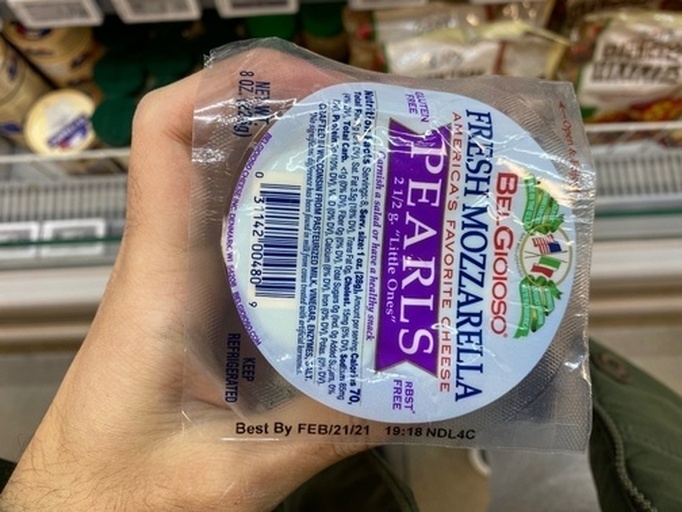
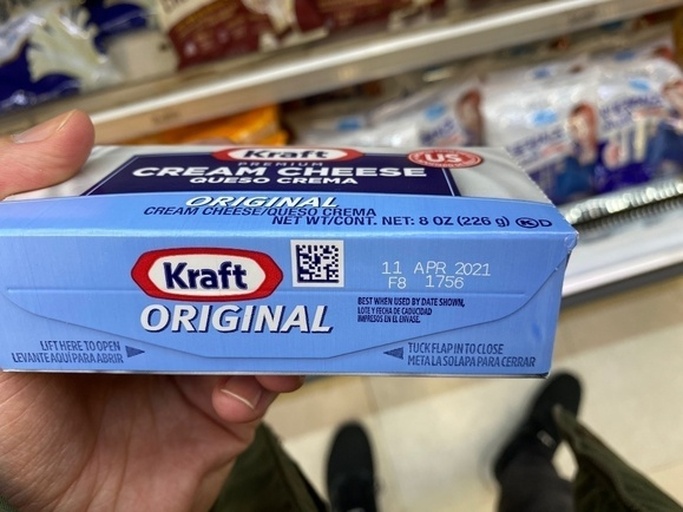
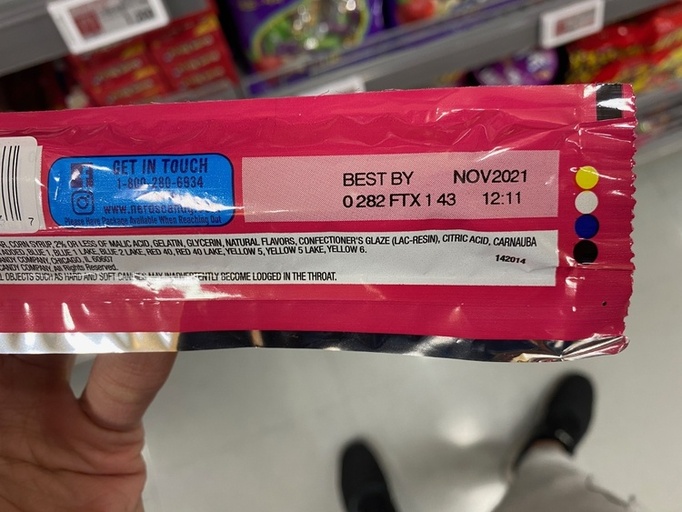
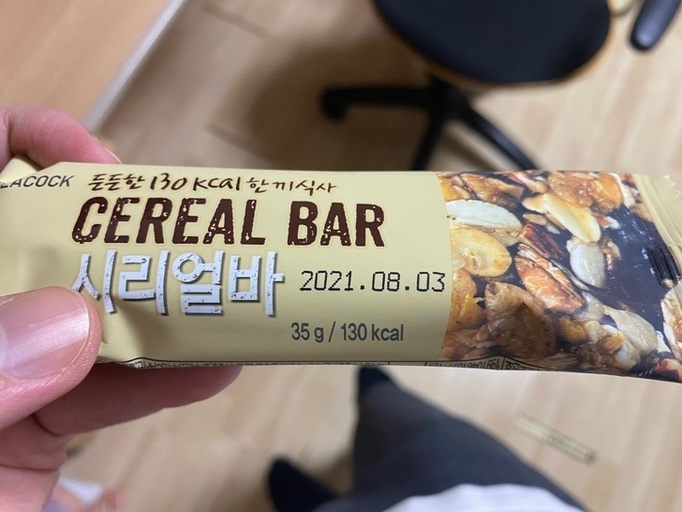

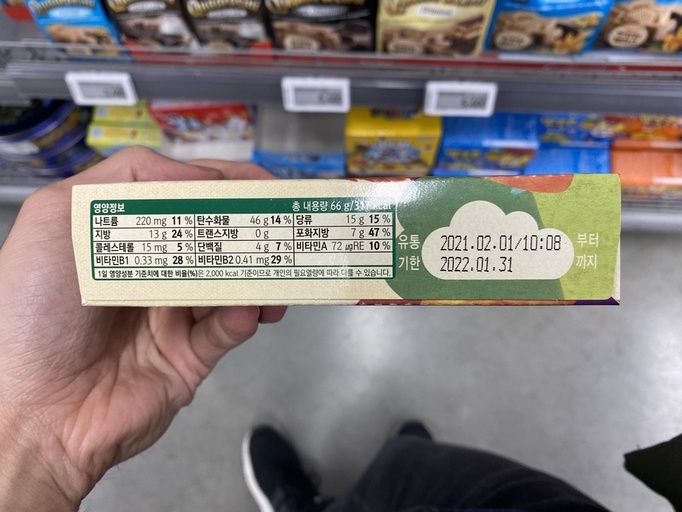

In the absence of a publicly available dataset for expiration-date understanding, six datasets were constructed for date detection, parsing, and recognition. Collectively named ExpDate, these datasets contain real and synthetic images of product packages, complete dates, and individual date components. They cover challenging scenarios involving diverse fonts and date formats, multiple dates, reflections, complex backgrounds, and variations in scale and appearance.
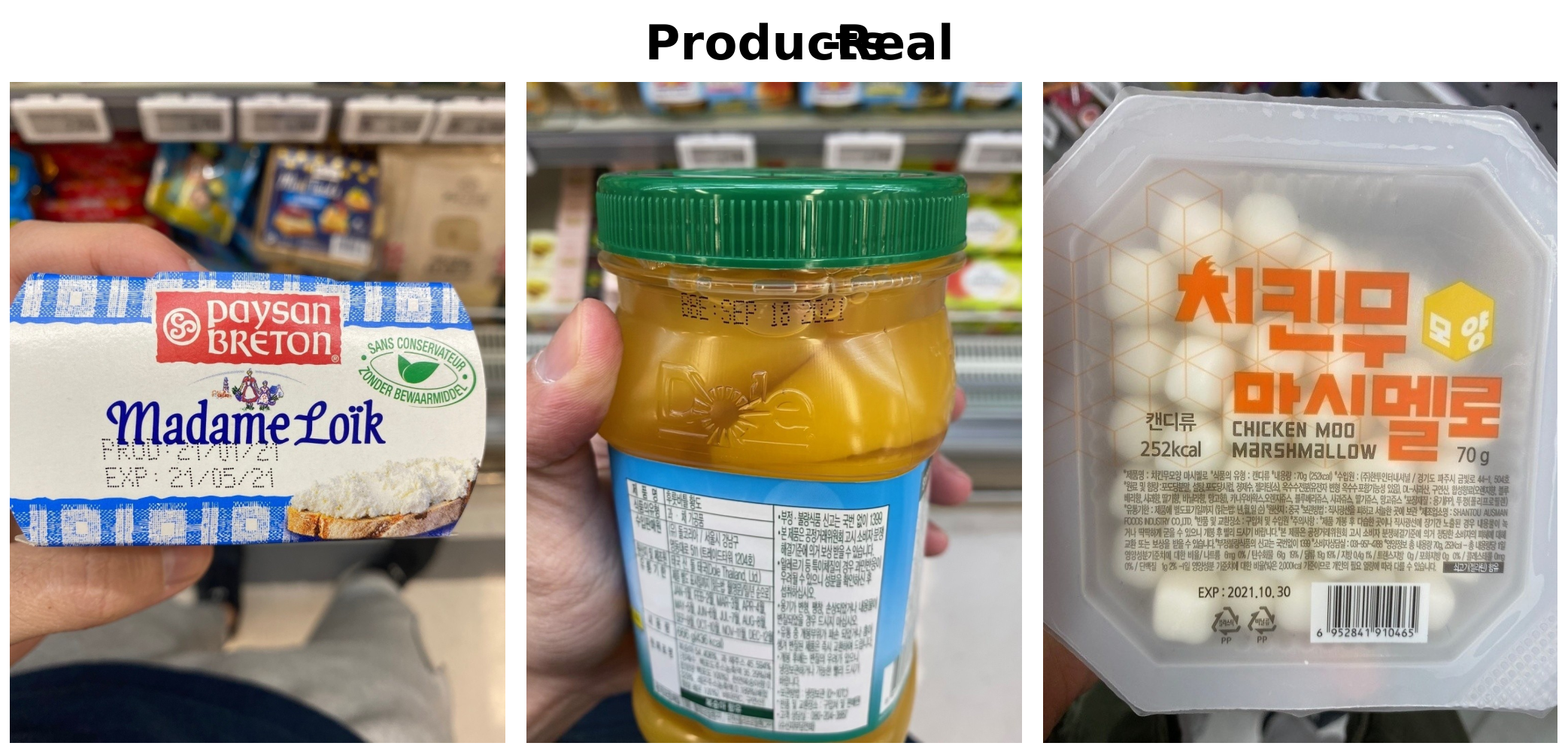
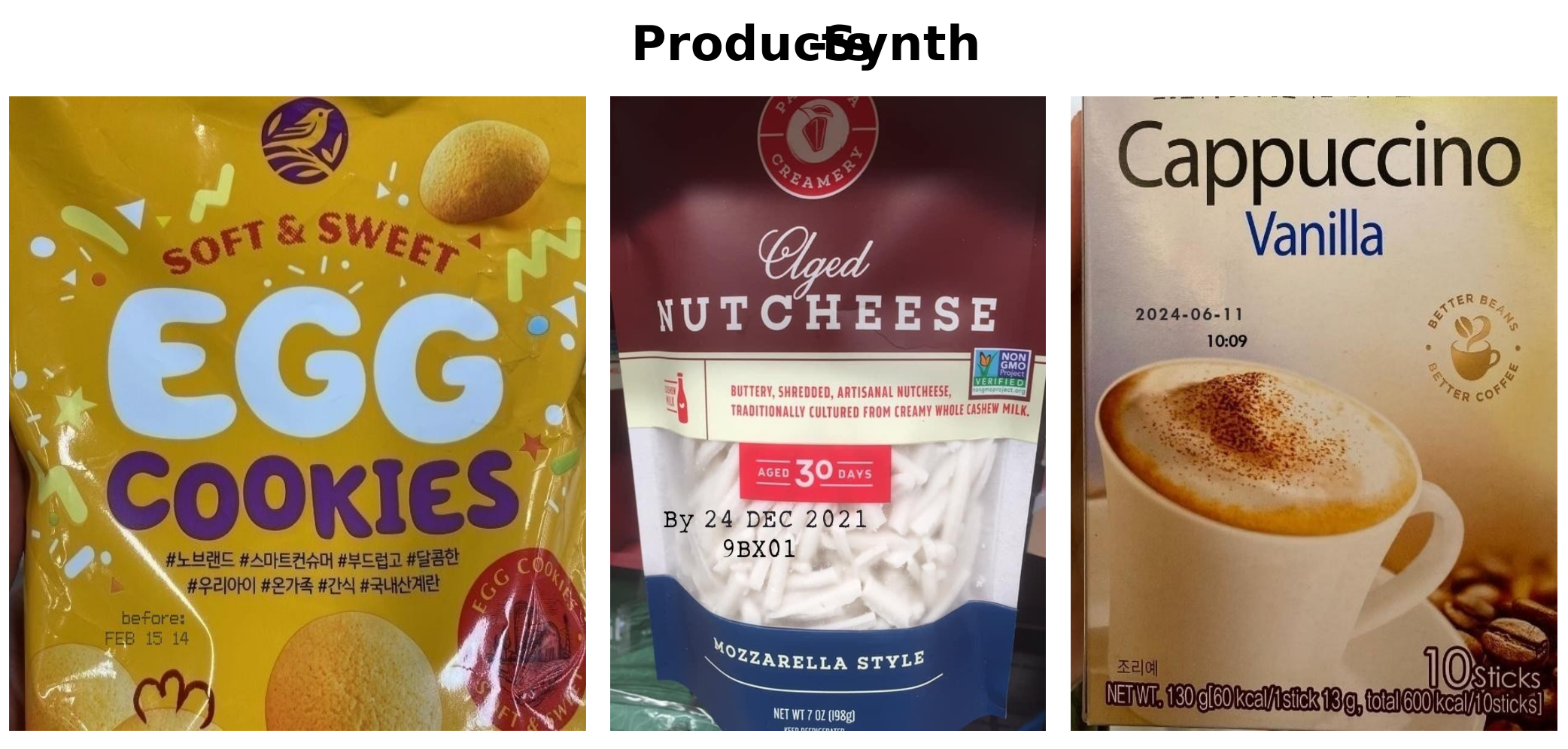
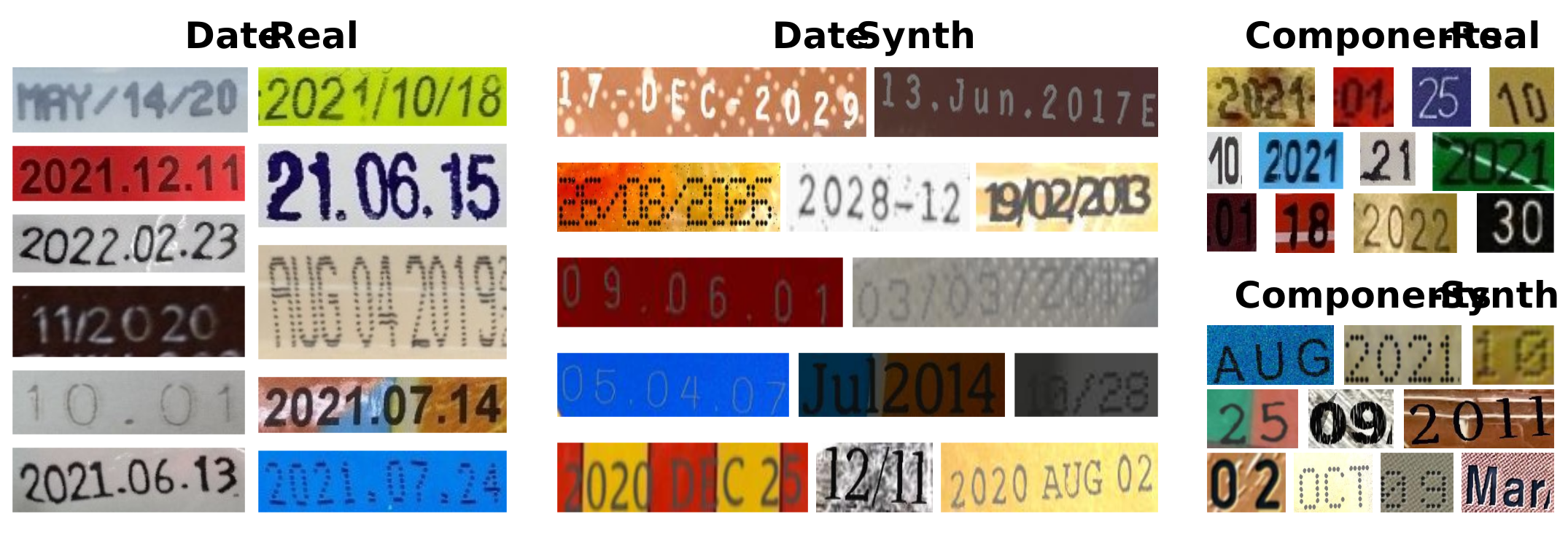
Representative expiration-date images from ExpDate, illustrating diverse fonts and date formats, multiple dates, reflections, complex backgrounds, and other challenging imaging conditions.
For the date detection task, Products-Real contains 1,767 real-world images of food, beverage, and pharmaceutical products with approximately horizontal date labels. The images were collected from diverse product packages to capture variations in packaging materials, printing styles, backgrounds, and imaging conditions. The dataset is divided into 1,102 training images and 665 test images. In addition, Products-Synth contains approximately 12,000 product images with synthetically generated dates and is used exclusively for training. These synthetic samples increase the diversity of date appearances and provide additional variations that may be difficult to collect under real-world conditions.
For the date parsing task, Date-Synth contains 128,000 synthetic date images and is used to train the day–month–year (DMY) detection network. The dataset contains diverse date arrangements and formats, enabling the network to identify and separate the day, month, and year components. Date-Real, which contains date regions extracted from real product images, is used to evaluate parsing performance under practical imaging conditions.
For the character recognition task, Components-Synth contains 450,000 synthetically generated images of individual date components. These samples provide substantial variations in characters, fonts, scales, and visual appearance for training the recognition network. Components-Real, derived from the date components annotated in Date-Real, is used to evaluate recognition performance on real-world samples.
Overall, ExpDate comprises six real and synthetic datasets covering the complete expiration-date detection, parsing, and recognition pipeline. It includes challenging cases involving different date scales and formats, diverse fonts, including dot-matrix fonts, reflections, uneven illumination, complex backgrounds, and multiple dates on a single product. By combining large-scale synthetic training data with real-world training and evaluation samples, ExpDate supports the development and systematic evaluation of robust expiration-date understanding systems. The 13 supported expiration-date formats are presented in Table 1.
| # | Date Format | Date | # | Date Format | Date |
|---|---|---|---|---|---|
| 1 | DDMMYY | 29 10 23 | 8 | MMDD | 10 29 |
| 2 | DDMMMYY | 29 OCT 23 | 9 | MMYYYY | 10 2023 |
| 3 | DDMMYYYY | 29 10 2023 | 10 | MMMYYYY | OCT 2023 |
| 4 | DDMMMYYYY | 29 OCT 2023 | 11 | MMMDDYY | OCT 29 23 |
| 5 | YYYYMM | 2023 10 | 12 | MMMDDYYYY | OCT 29 2023 |
| 6 | YYYYMMDD | 2023 10 29 | 13 | YYYYMMMDD | 2023 OCT 29 |
| 7 | YYMMDD | 23 10 29 |
Each date component in Products-Real and Products-Synth is annotated with its class label, bounding-box coordinates, transcription, and image dimensions. Four classes are defined in the training sets: date, due mark, production mark, and code mark. For evaluation, expiration-date component in the Products-Real test set are additionally labeled as exp, allowing them to be distinguished from other dates and evaluated separately.
Each date component in Date-Real and Date-Synth is annotated with its class label, bounding-box coordinates, and transcription. The component classes correspond to the day, month, and year. Components-Real and Components-Synth contain the extracted date components and their corresponding transcriptions. The following code blocks show the annotation formats used for each dataset.
{
  // For Products Datasets
  "image name": {
    "height": int,
    "width": int,
    "ann": [
      {
        "cls": str,
        "bbox": [x1, y1, x2, y2],
        "transcription": str,
        "dmy_ann": [  // for evaluation
          {
            "cls": str,
            "bbox": [x1, y1, x2, y2],
            "transcription": str
          },
          ...
        ]
      }
    ]
  },
  ...
}
{
  // For Date Datasets
  "image name": {
    "height": int,
    "width": int,
    "ann": [
      {
        "cls": str,
        "bbox": [x1, y1, x2, y2],
        "transcription": str
      },
      ...
    ]
  },
  ...
}
{
  // For Components Datasets
  "image name": {
    "height": int,
    "width": int,
    "transcription": str
  },
  ...
}
The ExpDate dataset is licensed under the Creative Commons Attribution 4.0 International (CC BY 4.0) License . The dataset may be used, shared, and adapted for both research and commercial purposes, provided that appropriate credit is given to the original creators and any modifications are clearly indicated.
When using ExpDate, please cite the associated publication and acknowledge that the dataset was created by the Korea Institute of Science and Technology (KIST).
If you find this work useful in your research, please consider citing:
@article{seker2022generalized,
  title     = {A generalized framework for recognition of expiration dates on product packages using fully convolutional networks},
  author    = {Seker, Ahmet Cagatay and Ahn, Sang Chul},
  journal   = {Expert Systems with Applications},
  volume    = {203},
  pages     = {117310},
  year      = {2022},
  publisher = {Elsevier},
}